
If you've spent any time reading about gut health, you've probably seen the terms "prebiotics" and "probiotics" used almost interchangeably. They sound similar, they're often shelved next to each other at the supplement store, and both claim to support your digestive system. But they're fundamentally different things — and understanding that difference can save you money, prevent wasted effort, and actually help you build a healthier gut. Here's the practical breakdown.
Probiotics: The Live Bacteria
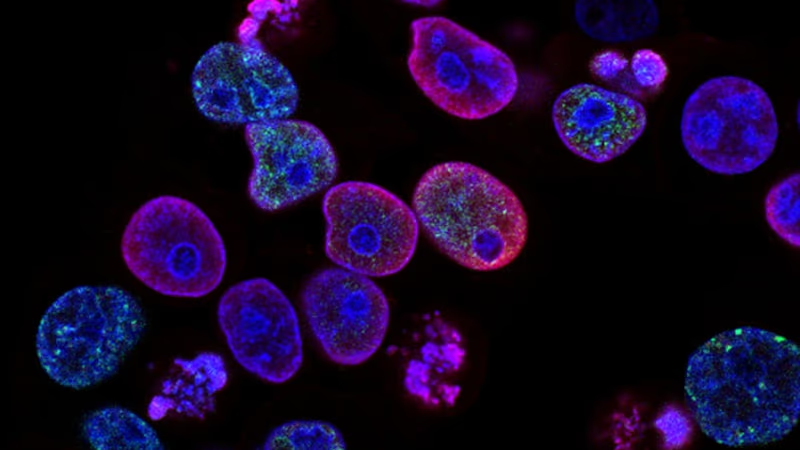
Probiotics are live microorganisms — mostly bacteria, sometimes yeast — that provide a health benefit when consumed in adequate amounts. They're the actual residents you're trying to add to your gut ecosystem. Think of them as beneficial tenants moving into an apartment building. Common probiotic genera include Lactobacillus, Bifidobacterium, and Saccharomyces, each with dozens of species and strains that do different things.
You can get probiotics from fermented foods like yogurt with live active cultures, kefir, sauerkraut, kimchi, miso, tempeh, and kombucha. You can also get them from supplements, which typically contain specific strains in concentrated doses measured in colony-forming units (CFUs). The key thing to remember: probiotics must be alive when you consume them to do anything useful.
Prebiotics: The Food for Bacteria
Prebiotics are non-digestible fibers and compounds that feed the beneficial bacteria already living in your gut. They're not alive — they're fuel. When prebiotic fibers reach your large intestine undigested, the good bacteria there ferment them and produce short-chain fatty acids (SCFAs) like butyrate, propionate, and acetate. These SCFAs nourish the cells lining your colon, reduce inflammation, and support immune function.
The most well-studied prebiotics include inulin, fructooligosaccharides (FOS), galactooligosaccharides (GOS), and resistant starch. You don't need a supplement to get them — they're found naturally in many everyday foods.
Best Food Sources of Prebiotics
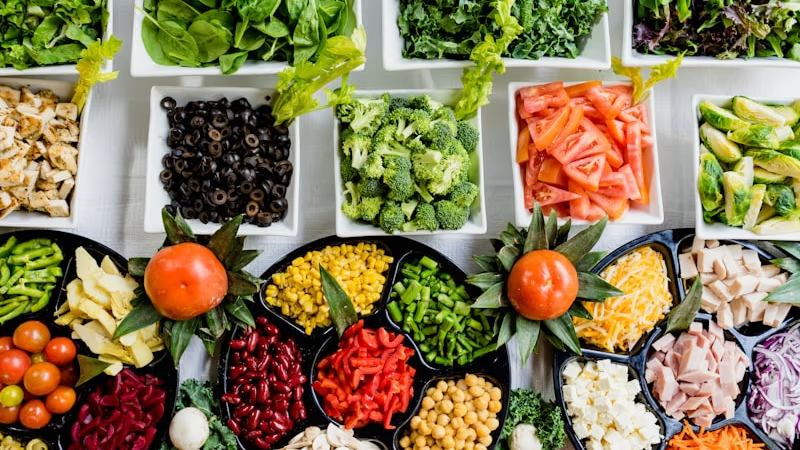
- Garlic and onions — Rich in inulin and FOS, two of the most effective prebiotic fibers. Raw forms contain more, but cooked versions still provide benefits.
- Bananas — Especially slightly underripe bananas, which are high in resistant starch that feeds Bifidobacterium species.
- Asparagus and leeks — Excellent sources of inulin. A single serving of leeks provides a meaningful dose of prebiotic fiber.
- Oats — Contain beta-glucan fiber, which has prebiotic properties and also supports healthy cholesterol levels.
- Jerusalem artichokes — One of the richest natural sources of inulin, though they can cause significant gas if you're not used to them.
- Legumes (beans, lentils, chickpeas) — High in resistant starch and various fibers that promote the growth of beneficial gut bacteria.
The Key Difference, Simply Put
Here's the simplest way to think about it: probiotics are the garden, prebiotics are the fertilizer. Probiotics introduce beneficial bacteria into your gut. Prebiotics feed the beneficial bacteria that are already there. One adds new organisms, the other strengthens the ones you've got. Both matter, but they work through completely different mechanisms.
This distinction matters practically because it changes what you should prioritize. If you already have a diverse, healthy microbiome but aren't eating enough fiber, you might benefit more from prebiotics. If your microbiome has been disrupted — say, by a course of antibiotics — probiotics might be the better starting point.
Synbiotics: When You Combine Both
Synbiotics are products or dietary approaches that combine prebiotics and probiotics together. The idea is straightforward: deliver beneficial bacteria and their preferred fuel at the same time, giving the probiotics a better chance of surviving and colonizing your gut. Some supplement manufacturers now offer synbiotic formulas, and the concept has gained traction in clinical research.
A 2024 meta-analysis published in Nutrients found that synbiotic supplementation was more effective than probiotics alone for improving markers of gut barrier integrity and reducing systemic inflammation. That said, you don't need a specialty product to achieve this effect. Eating yogurt (probiotic) with a banana and oats (prebiotic) is a synbiotic meal. So is having miso soup with vegetables. Nature got there first.
When Probiotics Help Most
Probiotics aren't a universal fix, but research supports their use in several specific situations where adding beneficial bacteria makes the most difference.
- After antibiotic use — Antibiotics kill bacteria indiscriminately, often wiping out beneficial species alongside harmful ones. Specific probiotic strains like Saccharomyces boulardii and Lactobacillus rhamnosus GG have strong evidence for reducing antibiotic-associated diarrhea.
- Irritable bowel syndrome (IBS) — Several clinical trials show that certain strains, particularly Bifidobacterium infantis 35624, can reduce bloating, abdominal pain, and irregular bowel movements in IBS patients.
- Traveler's diarrhea — Starting a probiotic a few days before travel and continuing through the trip may reduce the risk of traveler's diarrhea, especially to regions with different microbial environments.
- After a stomach bug — Probiotics can help restore microbial balance more quickly after acute gastroenteritis, potentially shortening recovery time by about a day on average.
When Prebiotics Help Most
Prebiotics tend to be most beneficial in situations where your existing gut bacteria need more support rather than reinforcements.
- Fiber-deficient diets — The average American eats about 15 grams of fiber daily, roughly half the recommended amount. If your diet is low in fruits, vegetables, and whole grains, prebiotic supplementation or dietary changes can make a meaningful difference.
- Feeding existing good bacteria — If you already have a diverse microbiome (thanks to a varied diet, limited antibiotic exposure, etc.), prebiotics help those beneficial species flourish without adding new ones.
- Improving mineral absorption — Certain prebiotics, particularly inulin, have been shown to improve calcium and magnesium absorption in the large intestine.
- Supporting regularity — Prebiotic fibers add bulk to stool and promote regular bowel movements, which can be especially helpful for people dealing with mild constipation.
Supplement Forms: What to Look For
If you decide to supplement rather than relying solely on food sources, here's what matters for each type.
Probiotic Supplements
- Look for specific strains, not just genera — A label that says "Lactobacillus acidophilus" is less informative than one that lists the full strain designation (e.g., Lactobacillus acidophilus NCFM). Strain-level identification means the manufacturer is using a researched organism.
- CFU count between 1-20 billion is sufficient for most people — Higher isn't automatically better. Most positive clinical trials used doses in this range.
- Check for third-party testing — Certifications from USP, NSF, or ConsumerLab confirm that the product contains what the label claims.
- Note storage requirements — Some probiotics require refrigeration. Shelf-stable formulas exist but should still be kept away from heat and direct sunlight.
Prebiotic Supplements
- Common forms include inulin powder, FOS, and partially hydrolyzed guar gum (PHGG) — Each has slightly different properties, but all serve as effective bacterial fuel.
- Start with a low dose — Prebiotic supplements can cause significant bloating and gas if you jump to a full dose immediately. Start with half the recommended amount and increase over one to two weeks.
- Powder forms are often more versatile — They can be mixed into smoothies, coffee (after it cools), oatmeal, or water, making them easier to incorporate into a routine.
Common Mistakes to Avoid
- Taking probiotics with hot drinks — This is one of the most common errors. Heat kills live bacteria. If you're washing down your probiotic capsule with hot coffee or tea, you may be rendering it useless. Use room-temperature or cool water instead.
- Wrong timing — Taking probiotics on an empty stomach exposes them to more concentrated stomach acid. Most survive better when taken with or just before a meal containing some fat.
- Neglecting prebiotics while supplementing probiotics — Sending in new bacteria without feeding them is like planting seeds in dry soil. If your diet is low in fiber, the probiotics you're taking have less chance of thriving.
- Assuming all fermented foods are probiotic — Not all fermented foods contain live cultures by the time they reach your plate. Pasteurized sauerkraut, for example, has no live bacteria. Look for labels that say "contains live active cultures" and check the refrigerated section.
- Quitting too soon — Both prebiotics and probiotics typically need two to four weeks of consistent use before noticeable effects appear. Initial bloating or gas is common and usually resolves within a week as your gut adjusts.
Do You Need Both?
For most people, the honest answer is: you benefit from both, but you may not need to supplement both. If you eat a varied diet that includes fermented foods and plenty of fiber-rich plants, you're already getting a natural combination of probiotics and prebiotics through food. That's the foundation, and for many people, it's enough.
Supplementing makes sense in targeted situations — recovering from antibiotics, managing IBS symptoms, or compensating for a diet that's genuinely lacking in fiber or fermented foods. The research increasingly suggests that combining both (the synbiotic approach) produces better outcomes than either alone, but you don't need expensive specialty products to achieve that. A probiotic capsule taken with a fiber-rich meal accomplishes the same goal.
Looking for Gut Health Supplements?
We've reviewed and compared several digestive health supplements, examining their strain profiles, prebiotic content, clinical backing, and overall value. If you're considering a product, our detailed reviews can help you make an informed choice.
Browse Digestive Health ReviewsThe Bottom Line
Prebiotics and probiotics are partners, not competitors. Probiotics add beneficial bacteria to your gut; prebiotics feed them. You can get both from food — fermented foods for probiotics, fiber-rich plants for prebiotics — and that dietary approach remains the most sustainable and well-supported strategy for long-term gut health. Supplements have their place, particularly for specific conditions like antibiotic recovery or IBS, but they work best when layered on top of a diet that already supports your microbiome. Start with food, supplement strategically, and give your gut time to adjust.
Looking for Digestive Health supplements?
Our experts have reviewed and compared the top digestive health supplements to help you find the right one.
See our expert comparisonFrequently Asked Questions
Can you take prebiotics and probiotics at the same time?
Yes, and there may be advantages to doing so. Taking them together — known as a synbiotic approach — ensures that the beneficial bacteria have an immediate food source, which can improve their survival and colonization in the gut. You can either use a combined synbiotic supplement or simply take your probiotic with a fiber-rich meal.
Do prebiotics cause bloating?
They can, especially when you first start taking them or increase your intake too quickly. Prebiotic fibers are fermented by gut bacteria, and that fermentation produces gas. This is a normal part of the process and usually diminishes within one to two weeks as your microbiome adjusts. Start with a small dose and increase gradually to minimize discomfort.
Are prebiotics better than probiotics for long-term gut health?
Neither is inherently better — they serve different functions. Prebiotics may offer a more sustainable long-term strategy because they strengthen the bacteria you already have, rather than relying on continuous supplementation of new organisms. However, the best approach for most people is a combination of both through a varied diet rich in fermented foods and fiber.
Can you get enough prebiotics and probiotics from food alone?
For most healthy adults, yes. A diet that includes fermented foods like yogurt, kefir, or kimchi alongside fiber-rich foods like garlic, onions, oats, and legumes provides a natural synbiotic effect. Supplements are most useful in specific situations — after antibiotics, during travel, or when dietary variety is limited.
What happens if you take probiotics without prebiotics?
The probiotics will still provide some benefit, but they may not thrive or persist in your gut as effectively. Without a reliable food source, supplemented bacteria are more likely to pass through your system without establishing lasting colonies. Eating fiber-rich foods alongside your probiotic — even without a dedicated prebiotic supplement — helps address this.