
You carry around 38 trillion microorganisms in your body — roughly the same number as your own human cells. Most of them live in your gut, and together they form what scientists call the gut microbiome: a dense, complex ecosystem that weighs about 3 to 5 pounds and contains over 1,000 different species. The Human Microbiome Project, a landmark initiative launched by the National Institutes of Health, has revealed that this internal ecosystem does far more than help you digest food. It shapes your immune system, influences your mood, affects your metabolism, and may even play a role in how you age. Understanding your microbiome isn't just academic curiosity — it's one of the most practical things you can do for your health.
What Exactly Is the Gut Microbiome?
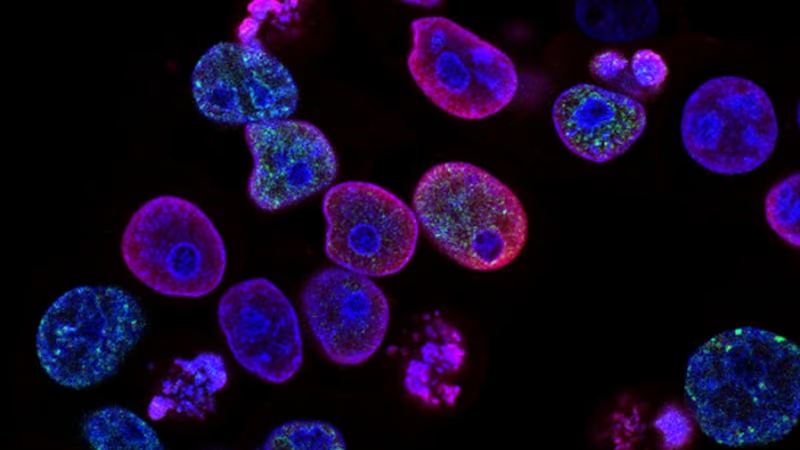
The term 'microbiome' refers to the entire community of microorganisms — bacteria, fungi, viruses, archaea, and other single-celled organisms — living in a particular environment. Your gut microbiome specifically refers to the trillions of microbes inhabiting your gastrointestinal tract, with the largest concentration in your large intestine (colon). These aren't invaders. They've co-evolved with humans over millions of years in a relationship that benefits both sides.
To put the scale in perspective: the collective genome of your gut microbes contains roughly 3.3 million genes — about 150 times more than the human genome. That genetic firepower gives your microbiome capabilities your own cells simply don't have: breaking down complex plant fibers, synthesizing essential vitamins like B12 and K2, producing short-chain fatty acids that fuel your colon cells, and metabolizing compounds that would otherwise be toxic. Your microbiome is, in a very real sense, an organ — one you can't see but absolutely can't live without.
The Gut-Brain Axis: Your Second Brain
If you've ever felt butterflies before a big presentation or lost your appetite when stressed, you've experienced the gut-brain axis in action. This bidirectional communication highway connects your central nervous system to your enteric nervous system — the network of 500 million neurons lining your gastrointestinal tract. The primary physical link is the vagus nerve, the longest cranial nerve in your body, which runs from your brainstem directly to your abdomen.
But the connection goes deeper than nerve signals. Your gut microbes produce neurotransmitters — the same chemical messengers your brain uses. About 95% of your body's serotonin (a key regulator of mood, sleep, and appetite) is manufactured in the gut, not the brain. Gut bacteria also produce gamma-aminobutyric acid (GABA), dopamine, and norepinephrine. A 2019 study published in Nature Microbiology analyzed the microbiomes of over 1,000 people and found that two bacterial genera — Coprococcus and Dialister — were consistently depleted in individuals with depression, regardless of antidepressant use.
This doesn't mean gut bacteria cause depression. But it does mean the gut-brain axis is a legitimate biological pathway, not a wellness buzzword. Researchers at Johns Hopkins, CalTech, and University College Cork are now investigating whether targeted probiotic interventions — sometimes called 'psychobiotics' — could complement traditional mental health treatments.
Your Microbiome and Immunity: The 70% Connection
Approximately 70% of your immune system resides in your gut, organized in a structure called gut-associated lymphoid tissue (GALT). This isn't a coincidence — your intestines are the body's largest interface with the outside world. If you flattened out the intestinal lining, it would cover roughly the area of a studio apartment. Every day, your gut immune system has to distinguish between harmless food particles, beneficial bacteria, and genuine pathogens. It's one of the most complex decision-making systems in biology.
Your gut microbes play an active role in training this immune system. From birth, microbial exposure teaches immune cells which organisms are friends and which are threats. Beneficial bacteria stimulate the production of regulatory T cells — immune cells that prevent overreactions. They also strengthen the gut barrier, produce antimicrobial peptides, and compete with harmful bacteria for resources. Research published in Cell Host & Microbe has shown that germ-free mice (raised without any gut bacteria) develop severely impaired immune systems, demonstrating just how dependent immunity is on microbial partnership.
Why Microbiome Diversity Matters
Ecologists have long known that diverse ecosystems are more resilient — and the same principle applies inside your gut. Higher microbiome diversity is consistently associated with better health outcomes in the research literature. The American Gut Project, one of the largest citizen-science microbiome studies ever conducted, found that the single strongest predictor of a healthy gut microbiome wasn't any single food or supplement — it was the number of different plant species a person consumed per week.
Low diversity, on the other hand, has been linked to an unsettling range of conditions: obesity, type 2 diabetes, inflammatory bowel disease, allergies, asthma, and even certain cancers. A 2019 study in Nature Medicine found that people with lower microbiome diversity had higher markers of systemic inflammation and worse cardiometabolic health — independent of their diet and body weight. Diversity isn't just a nice-to-have. It appears to be a fundamental marker of gut ecosystem health.
What Damages Your Microbiome
Antibiotics
Antibiotics are life-saving medications, but they operate like a carpet bomb in your gut — they don't distinguish between harmful bacteria and beneficial ones. A single course of broad-spectrum antibiotics (like ciprofloxacin or amoxicillin) can reduce microbiome diversity by 30-50% within days. A 2018 study in Nature Microbiology found that some bacterial species hadn't fully recovered even six months after antibiotic treatment. This doesn't mean you should avoid antibiotics when you need them — it means you should take steps to support your gut during and after a course.
Processed Foods and Low Fiber Intake
Your beneficial gut bacteria feed primarily on dietary fiber — and the average American gets roughly 15 grams per day, well below the recommended 25-38 grams. Without adequate fiber, beneficial species starve, and opportunistic bacteria fill the vacuum. Ultra-processed foods compound the problem. Research from the Weizmann Institute of Science has shown that common food additives — emulsifiers like carboxymethylcellulose and polysorbate 80 — can erode the protective mucus layer lining the intestines, bringing bacteria into closer contact with gut cells and triggering low-grade inflammation.
Chronic Stress
The gut-brain axis runs in both directions. Chronic psychological stress has been shown to alter gut motility, increase intestinal permeability, shift microbial composition toward pro-inflammatory species, and suppress the growth of beneficial Lactobacillus and Bifidobacterium strains. Animal studies have demonstrated that stress hormones like norepinephrine can directly change how bacteria behave — some pathogens actually become more virulent when exposed to stress hormones.
Lack of Dietary Diversity
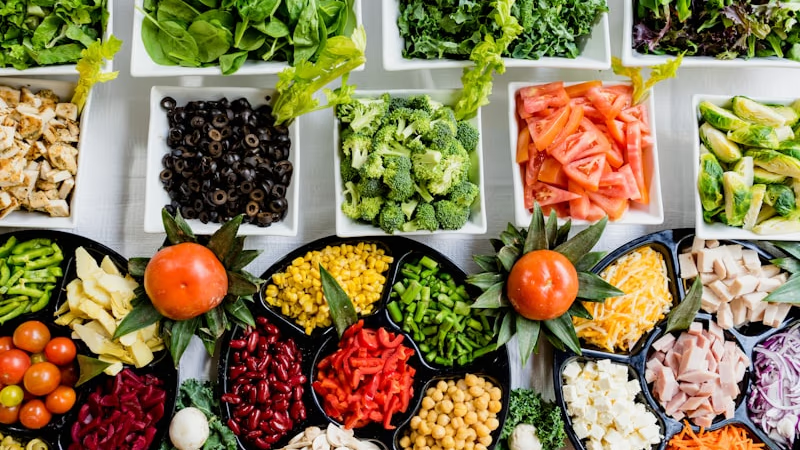
Even if you eat a 'healthy' diet, eating the same foods repeatedly limits the range of nutrients available to your microbiome. Different bacterial species thrive on different types of fiber and polyphenols. A diet centered on the same five vegetables and two grains, however nutritious they may be individually, won't support the same microbial diversity as a varied diet that rotates through dozens of plant foods. The rule of thumb from the American Gut Project: aim for 30 different plant foods per week.
How to Build a Healthier Microbiome
Prioritize Fiber Diversity
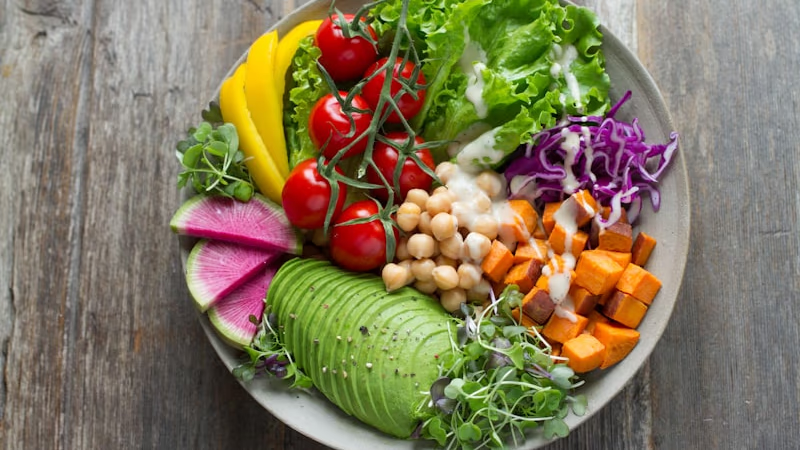
Not all fiber is created equal. Soluble fiber (found in oats, beans, and apples) feeds Bifidobacteria. Resistant starch (in cooked-and-cooled potatoes, green bananas, and lentils) fuels butyrate-producing bacteria. Inulin (in garlic, onions, and asparagus) acts as a potent prebiotic. The goal isn't to maximize one type of fiber — it's to diversify your fiber sources so you're feeding as many beneficial species as possible. Think of it as setting a varied buffet for your microbiome.
Embrace Fermented Foods
A landmark 2021 study from Stanford University, published in Cell, compared the effects of a high-fiber diet versus a high-fermented-food diet over 10 weeks. The results surprised researchers: the fermented food group showed significantly increased microbiome diversity and decreased levels of 19 inflammatory proteins — including interleukin-6, a marker linked to chronic diseases like type 2 diabetes and rheumatoid arthritis. The high-fiber group saw benefits too, but the diversity gains were less pronounced. Practical fermented foods include yogurt (with live active cultures), kefir, sauerkraut, kimchi, miso, tempeh, and kombucha.
Use Prebiotics Strategically
Prebiotics are non-digestible compounds that selectively feed beneficial bacteria. They occur naturally in foods like garlic, onions, leeks, asparagus, bananas, oats, and flaxseed. You don't need a prebiotic supplement if your diet is varied — but if your fiber intake is low or you're recovering from antibiotic use, prebiotic supplements (typically containing inulin, fructooligosaccharides, or galactooligosaccharides) can help jumpstart beneficial bacterial growth. Start slowly, though — introducing too much prebiotic fiber at once can cause bloating and gas as your microbiome adjusts.
Probiotics: What the Research Actually Shows
Probiotics are one of the most popular supplement categories in the world, but the science is more nuanced than most marketing suggests. The most important thing to understand is that probiotic effects are strain-specific — meaning the benefits of Lactobacillus rhamnosus GG don't automatically apply to other Lactobacillus species or strains. A probiotic label that only lists the genus and species (like 'Lactobacillus acidophilus') without specifying the strain isn't giving you enough information.
That said, certain strains have robust clinical evidence behind them. Saccharomyces boulardii has strong data for preventing antibiotic-associated diarrhea. Lactobacillus rhamnosus GG is well-studied for acute gastroenteritis in children. VSL#3 (a multi-strain formula) has evidence for ulcerative colitis maintenance. Bifidobacterium infantis 35624 has shown benefit in irritable bowel syndrome. The key is matching the strain to the condition — not just taking a generic 'probiotic blend' and hoping for the best.
It's also worth noting that most probiotic strains don't permanently colonize the gut. They pass through, exerting beneficial effects along the way, but they typically don't establish long-term residency. This means probiotics work best as an ongoing intervention alongside diet changes — not as a one-time fix.
Testing Your Microbiome: Is It Worth It?
Direct-to-consumer microbiome tests have exploded in popularity. Companies will analyze a stool sample and tell you what bacterial species live in your gut, often with personalized diet recommendations. The technology is real — these tests use 16S rRNA gene sequencing or shotgun metagenomic sequencing to identify bacterial DNA. But the interpretation is where things get shaky.
The honest truth is that the science isn't yet advanced enough to translate a microbiome snapshot into reliable, individualized recommendations. We know that diversity is good and certain broad patterns are associated with health or disease — but we can't yet say 'you have 2% too little Akkermansia, so eat more cranberries.' Your microbiome also fluctuates day to day based on what you ate, how you slept, and whether you're stressed. A test taken on Monday might look different from one taken on Thursday.
For most people, the money spent on microbiome testing would be better invested in more diverse groceries and quality fermented foods. However, if you're working with a gastroenterologist on a specific condition, microbiome testing can sometimes provide useful clinical context.
Common Microbiome Myths Debunked
Myth: Detox Cleanses Reset Your Microbiome
Juice cleanses, colon cleanses, and 'detox' protocols are marketed as microbiome resets, but there's no evidence they improve microbiome health. In fact, colon cleanses can strip away beneficial bacteria and disrupt the mucus layer that protects your gut lining. Your liver, kidneys, and the microbiome itself are your body's detox system — they don't need a juice cleanse to function. If you want to 'reset' your gut, the evidence points to gradually increasing fiber diversity and fermented food intake, not fasting or purging.
Myth: One Probiotic Works for Everything
This is perhaps the biggest misconception in the probiotic industry. Different strains have different mechanisms of action and different clinical evidence. A probiotic that helps with antibiotic-associated diarrhea won't necessarily help with IBS, and a strain effective for vaginal health may do nothing for your digestion. Always look for strain-specific evidence that matches your specific health concern.
Myth: More CFUs Means a Better Probiotic
Colony-forming units (CFUs) indicate how many live organisms a probiotic contains, and bigger numbers are a popular marketing tool. But clinical trials typically use doses between 1 billion and 100 billion CFUs, and more isn't always better. What matters more than CFU count is whether the strain has clinical evidence at the dose being used, whether the organisms are alive at the time of consumption (not just at manufacture), and whether they can survive stomach acid to reach the intestines.
When to See a Gastroenterologist
While diet and lifestyle changes can address many gut concerns, some symptoms warrant professional evaluation. See a gastroenterologist if you experience persistent changes in bowel habits lasting more than two weeks, unexplained weight loss, blood in your stool, severe or worsening abdominal pain, difficulty swallowing, or chronic heartburn that doesn't respond to over-the-counter treatment. These symptoms don't necessarily mean something serious, but they deserve proper investigation.
If you've been diagnosed with a condition like IBS, inflammatory bowel disease (Crohn's or ulcerative colitis), SIBO (small intestinal bacterial overgrowth), or celiac disease, working with a gastroenterologist and ideally a registered dietitian can help you develop a targeted approach that goes beyond general microbiome advice. Self-treating complex gut conditions with supplements alone can delay effective treatment.
Explore Digestive Health Supplements
If you're looking into supplements to support your gut microbiome, we've reviewed several digestive health products — analyzing strains, dosages, clinical evidence, and real-world results. Our reviews can help you cut through the marketing noise.
Browse Digestive Health ReviewsThe Bottom Line
Your gut microbiome is one of the most dynamic and influential systems in your body. It trains your immune system, communicates with your brain, manufactures essential compounds, and responds rapidly to what you eat and how you live. The science has advanced enormously since the Human Microbiome Project launched, but we're still in the early chapters of understanding this ecosystem. What we do know is actionable: eat a wide variety of plant foods, include fermented foods regularly, be judicious with antibiotics, manage stress, and if you use probiotics, choose strains backed by evidence for your specific concern. Your microbiome isn't fixed — it's a living system that changes with your choices, starting today.
Looking for Digestive Health supplements?
Our experts have reviewed and compared the top digestive health supplements to help you find the right one.
See our expert comparisonFrequently Asked Questions
How many species of bacteria live in the gut microbiome?
The average human gut hosts over 1,000 different bacterial species, though the exact number varies from person to person. The Human Microbiome Project identified more than 10,000 microbial species across the human body, with the greatest concentration and diversity found in the large intestine.
Can you change your gut microbiome through diet?
Yes — and faster than most people expect. Research shows that dietary changes can begin shifting microbial composition within 24 to 48 hours. However, sustained changes in microbiome diversity typically require 2 to 4 weeks of consistent dietary modification. The most effective strategy is increasing the variety of plant-based foods and including fermented foods regularly.
What is the gut-brain axis and why does it matter?
The gut-brain axis is a bidirectional communication system connecting your gastrointestinal tract and your central nervous system, primarily through the vagus nerve, hormonal signaling, and microbial metabolites. It matters because your gut produces about 95% of your body's serotonin and directly influences mood, stress response, and cognitive function. Disruptions in gut health have been linked to anxiety, depression, and other neurological conditions.
Are at-home microbiome tests accurate?
The sequencing technology used in at-home microbiome tests is generally accurate for identifying which bacterial species are present. However, the personalized dietary and supplement recommendations these companies provide are not yet well-supported by science. Your microbiome also fluctuates daily, so a single test provides only a snapshot. For most people, investing in dietary diversity will yield more reliable results than testing.
Should I take probiotics every day?
It depends on your situation. Most probiotic strains don't permanently colonize the gut — they exert benefits while passing through, which is why consistent use is often more effective than sporadic supplementation. For specific conditions like IBS or post-antibiotic recovery, daily use of a clinically studied strain makes sense. For general health, prioritizing a fiber-rich, diverse diet with fermented foods may be equally effective and more sustainable long-term.
Support your gut health
Get honest digestive supplement reviews and science-backed gut health advice.
No spam. Unsubscribe anytime.