
"Leaky gut" is one of those terms that sparks strong reactions on both sides. Alternative health practitioners sometimes blame it for everything from fatigue to autoimmune disease, while some conventional doctors dismiss the concept entirely. The truth, as is often the case, falls somewhere in the middle. Increased intestinal permeability is a real, measurable phenomenon with genuine health implications — but the way it's discussed in popular health media often strays far from what the evidence actually supports.
What Is Intestinal Permeability?
Your intestinal lining is a single layer of cells — just one cell thick — that serves as a selective barrier. It needs to absorb nutrients from your food while keeping out bacteria, toxins, and undigested food particles. The cells in this lining are held together by structures called tight junctions. When these tight junctions become compromised, the barrier becomes more permeable than it should be, allowing substances to pass into the bloodstream that normally wouldn't.
This increased permeability is what people colloquially call "leaky gut." In the medical literature, it's referred to as increased intestinal permeability, and it has been documented in numerous studies using validated testing methods. It's not a fringe concept — it's recognized physiology. Where things get controversial is in the claims about what it causes and how to fix it.
Symptoms That May Be Linked to Increased Permeability
Because the gut interacts so extensively with the immune system — roughly 70% of your immune tissue is in your gut — increased permeability can trigger widespread inflammatory responses. The symptoms people report are often frustratingly vague, which makes diagnosis challenging.
- Chronic bloating, gas, and digestive discomfort — Often the most immediate and noticeable symptoms.
- Food sensitivities — Developing reactions to foods you previously tolerated, possibly because larger protein molecules are entering the bloodstream and triggering immune responses.
- Fatigue and brain fog — Systemic inflammation can affect energy levels and cognitive clarity.
- Joint pain — Inflammatory compounds from the gut can circulate to joints.
- Skin issues — Conditions like eczema, acne, and rosacea have been linked to gut health in several studies.
- Mood disturbances — The gut-brain axis means that gut inflammation can influence neurotransmitter production and mood regulation.
- Autoimmune flares — Some researchers believe increased permeability may be a contributing factor in the development or worsening of autoimmune conditions, though this is still being investigated.
What Causes Increased Intestinal Permeability?
Multiple factors can damage tight junctions and increase gut permeability. Often it's a combination rather than a single cause.
- Chronic stress — Sustained cortisol release directly affects gut barrier function.
- Poor diet — Diets high in refined sugar, processed foods, and low in fiber promote dysbiosis (an imbalance of gut bacteria), which weakens the intestinal lining.
- Excessive alcohol consumption — Alcohol disrupts tight junctions and is well-documented to increase intestinal permeability.
- Overuse of NSAIDs — Non-steroidal anti-inflammatory drugs like ibuprofen and naproxen can damage the gut lining with chronic use.
- Gut infections and dysbiosis — An overgrowth of harmful bacteria or a lack of beneficial species can compromise barrier function.
- Zonulin overproduction — Zonulin is a protein that regulates tight junctions. Certain triggers, including gluten in sensitive individuals and bacterial overgrowth, can cause excess zonulin release.
What the Research Actually Supports
It's important to be honest about what we know and don't know. Increased intestinal permeability has been convincingly demonstrated in celiac disease, inflammatory bowel disease (Crohn's and ulcerative colitis), type 1 diabetes, and liver disease. In these conditions, it appears to play a role in disease progression, though whether it's a cause or a consequence is still debated.
For conditions like irritable bowel syndrome, food sensitivities, chronic fatigue, and autoimmune diseases, the evidence for a causal link to intestinal permeability is suggestive but not conclusive. This doesn't mean the connection isn't real — it means the research is still catching up. What we can say is that the strategies that improve gut barrier function are also broadly good for your health, which makes them worth pursuing regardless.
Evidence-Based Strategies to Support Gut Barrier Health
Focus on Fiber and Fermented Foods
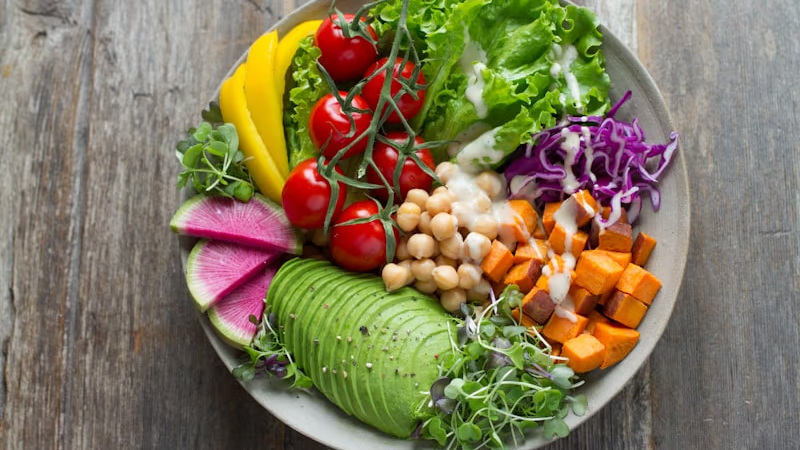
Dietary fiber is the primary fuel for beneficial gut bacteria, which produce short-chain fatty acids like butyrate. Butyrate is particularly important because it nourishes the cells of the intestinal lining and helps maintain tight junction integrity. Most Americans eat about half the recommended fiber intake. Gradually increasing your intake of vegetables, fruits, legumes, and whole grains can make a meaningful difference. Fermented foods like yogurt, kefir, sauerkraut, and kimchi introduce beneficial bacteria directly.
Reduce Processed Food and Added Sugar
Diets high in refined sugar and ultra-processed foods promote the growth of bacterial species associated with increased permeability and inflammation. You don't need to be perfect, but shifting the balance toward whole, minimally processed foods has consistent benefits for gut health across multiple studies.
Manage Stress and Sleep
The gut-brain connection isn't metaphorical — it's physical, mediated by the vagus nerve and various hormonal pathways. Chronic stress measurably increases intestinal permeability, and poor sleep compounds the effect. Addressing these factors is as important as dietary changes for gut barrier repair.
Be Strategic About Supplements
A few supplements have preliminary evidence for supporting gut barrier function. L-glutamine, an amino acid that fuels intestinal cells, has shown promise in some studies. Zinc carnosine has evidence for supporting stomach and intestinal lining health. Probiotics — particularly well-studied strains — can help rebalance the microbiome. However, supplements are not a substitute for dietary and lifestyle changes, and quality varies enormously across products.
Looking for Digestive Health Support?
We've reviewed several gut health supplements, examining their ingredients, strain diversity, and the evidence behind their claims. Our reviews help you separate substantiated products from marketing hype.
See Digestive Health ReviewsThe Bottom Line
Increased intestinal permeability is a real phenomenon with genuine health implications, but the popular narrative around "leaky gut" often oversimplifies the science. You don't need expensive specialty tests or a cabinet full of supplements to support your gut barrier. Eat a fiber-rich diet, minimize processed foods, manage stress, sleep well, avoid overusing NSAIDs, and moderate alcohol consumption. These aren't glamorous interventions, but they're the ones with the strongest evidence — and they benefit far more than just your gut.
Looking for Digestive Health supplements?
Our experts have reviewed and compared the top digestive health supplements to help you find the right one.
See our expert comparisonFrequently Asked Questions
Is leaky gut a recognized medical diagnosis?
Increased intestinal permeability is a recognized physiological phenomenon, measured in research settings. However, "leaky gut syndrome" as a standalone diagnosis is not officially recognized by most conventional medical organizations. This doesn't mean the condition isn't real — it means the medical establishment is still establishing diagnostic criteria and treatment protocols.
Can you test for leaky gut?
The lactulose-mannitol test is the most validated method for measuring intestinal permeability in research settings. Some integrative medicine practitioners use zonulin blood tests or other markers. However, these tests are not widely standardized for clinical use, and results can be difficult to interpret. Your symptoms and response to dietary changes are often more informative than any single test.
How long does it take to heal the gut lining?
The intestinal lining regenerates relatively quickly — intestinal cells turn over every three to five days. However, restoring optimal barrier function after chronic damage typically takes weeks to months of consistent dietary and lifestyle changes. Most people begin noticing symptomatic improvement within two to four weeks, with continued progress over several months.
Does gluten cause leaky gut in everyone?
No. Gluten triggers increased intestinal permeability in people with celiac disease through a well-understood mechanism involving zonulin. In people with non-celiac gluten sensitivity, the effect appears to occur in a subset of individuals. For the general population without celiac disease or gluten sensitivity, there's no strong evidence that gluten significantly affects intestinal permeability.
Are probiotics helpful for leaky gut?
Some evidence suggests that certain probiotic strains can support gut barrier function, but not all probiotics are equal. Strains that have shown promise in research include Lactobacillus rhamnosus GG and Saccharomyces boulardii. A broad approach — combining probiotics with prebiotic fiber from whole foods — is likely more effective than probiotics alone. Quality and strain specificity matter when choosing a probiotic product.