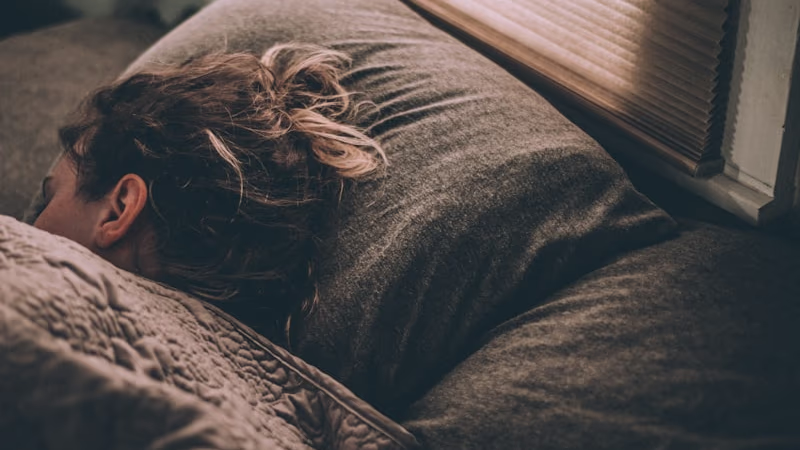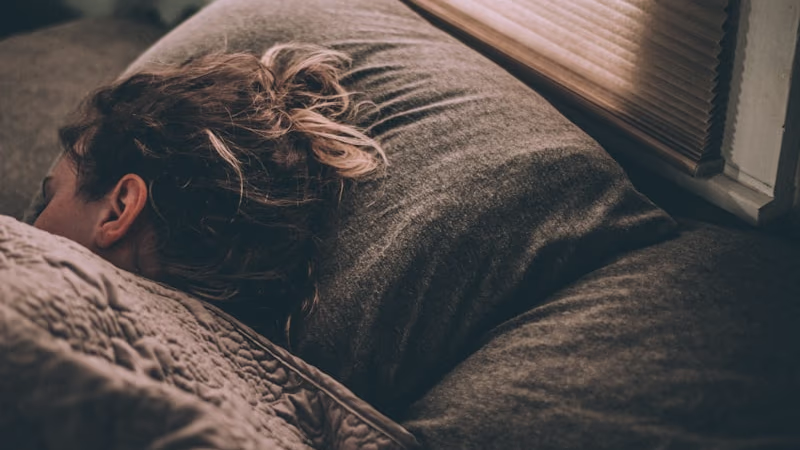

Sleep hygiene isn't a buzzword — it's a measurable set of behaviors that directly influence how fast you fall asleep, how long you stay asleep, and how restorative those hours actually are. According to the CDC, more than a third of U.S. adults are chronically sleep-deprived, and the consequences go far beyond daytime fatigue. Poor sleep raises your risk for obesity, type 2 diabetes, cardiovascular disease, and cognitive decline. The good news: most sleep problems respond to behavioral changes before you ever need a prescription. This checklist covers 15 habits with real evidence behind them — no vague advice, just specific actions you can start tonight.
What Is Sleep Hygiene, Exactly?
Sleep hygiene refers to the environmental conditions and daily habits that promote consistent, high-quality sleep. The term was first coined in the 1970s by sleep researcher Peter Hauri, and the concept has since been validated by decades of clinical research. Think of it like dental hygiene — a set of routine practices that prevent problems before they start. The 15 habits below are drawn from peer-reviewed research, including findings from Matthew Walker's sleep lab at UC Berkeley and guidelines from the American Academy of Sleep Medicine.
The 15-Point Sleep Hygiene Checklist
1. Keep a Consistent Sleep and Wake Schedule
This is habit number one for a reason. Your circadian rhythm — the 24-hour internal clock governed by the suprachiasmatic nucleus in your brain — thrives on regularity. A 2019 study in Scientific Reports found that irregular sleep schedules were associated with lower academic performance, worse mood, and delayed sleep onset. Matthew Walker puts it bluntly in Why We Sleep: regularity is the single most important sleep hygiene behavior. Set a fixed wake time (even on weekends) and work backward to find your ideal bedtime. A 30-minute variance is fine. A two-hour weekend shift is not.
2. Optimize Room Temperature (65-68°F)
Your body needs to drop its core temperature by about 2-3°F to initiate sleep. Research from the University of South Australia confirms that thermoregulation is a key driver of sleep onset. A bedroom kept between 65-68°F (18-20°C) facilitates this natural cooling process. If you tend to run hot, consider moisture-wicking sheets or a cooling mattress pad. If your partner prefers warmth, a dual-zone temperature system can help both of you sleep optimally.
3. Manage Blue Light Exposure
Blue light (wavelengths around 460-480 nm) suppresses melatonin production more powerfully than any other color of light. A Harvard study found that blue light shifted circadian rhythms by twice as much as green light of comparable brightness. The practical takeaway: dim overhead lights and avoid screens for at least 60 minutes before bed. If that's unrealistic, use night mode on your devices (which shifts to warmer tones) or wear blue-light-blocking glasses with amber lenses. The evidence on blue-light glasses is mixed for eye strain, but their effect on melatonin preservation is real.
4. Set a Caffeine Cutoff Time
Caffeine has an average half-life of about 6 hours, which means that if you drink a cup of coffee at 3 PM, roughly half of that caffeine is still circulating at 9 PM. A 2013 study in the Journal of Clinical Sleep Medicine showed that caffeine consumed even 6 hours before bedtime significantly reduced total sleep time by over an hour. The safe rule: no caffeine after 1-2 PM. And remember, caffeine hides in green tea, dark chocolate, pre-workout supplements, and some pain medications.
5. Understand How Alcohol Disrupts Sleep
Alcohol is a sedative, but sedation is not the same as sleep. While a glass of wine may help you fall asleep faster, alcohol fragments sleep architecture — particularly REM sleep, which is critical for memory consolidation and emotional regulation. A meta-analysis published in Alcoholism: Clinical and Experimental Research found that even moderate alcohol intake (1-2 drinks) reduced restorative sleep quality by 24%. If you drink, try to finish at least 3-4 hours before bed so your body has time to metabolize the alcohol.
6. Exercise — But Time It Right
Regular exercise is one of the most effective, evidence-backed ways to improve sleep quality. A meta-analysis in the European Journal of Sport Science found that consistent aerobic exercise reduced sleep onset latency (the time it takes to fall asleep) and increased total sleep time. However, timing matters. Vigorous exercise raises core body temperature and stimulates cortisol and adrenaline — all of which counteract sleep onset. Finish high-intensity workouts at least 3 hours before bed. Light activities like yoga, walking, or stretching are fine in the evening and may actually promote relaxation.
7. Make Your Bedroom Dark
Even small amounts of ambient light can interfere with melatonin production. A 2022 study from Northwestern University found that sleeping in a moderately lit room (100 lux — roughly a dim living room) increased heart rate, insulin resistance, and reduced deep sleep compared to sleeping in near-total darkness (less than 3 lux). Invest in blackout curtains or a quality sleep mask. Cover LED indicator lights on electronics. If you need a nightlight for safety, choose one with a red or amber hue, which has minimal impact on melatonin.
8. Build a 30-60 Minute Wind-Down Routine
Sleep doesn't work like a light switch — you can't go from full alertness to deep sleep instantly. Your brain needs a transition period. A structured wind-down routine 30-60 minutes before bed trains your nervous system to shift from sympathetic (fight-or-flight) to parasympathetic (rest-and-digest) mode. Effective wind-down activities include reading a physical book, taking a warm bath or shower (the subsequent body cooling mimics your natural temperature drop), gentle stretching, or listening to calming music. The key is consistency — doing the same sequence each night creates a Pavlovian association with sleep.
9. Limit Screen Time Before Bed
Beyond the blue light issue, screens are problematic because they deliver stimulating content. Checking email, scrolling social media, or watching an intense show activates your brain at exactly the wrong time. A 2014 study in Proceedings of the National Academy of Sciences found that people who read on an iPad before bed took longer to fall asleep, had less REM sleep, and felt sleepier the next morning compared to those who read a printed book. Set a digital curfew: devices go on a charger in another room at least 30 minutes before bed. If you use your phone as an alarm, buy a cheap alarm clock instead.
10. Manage Stress with Journaling or Relaxation Techniques
Racing thoughts at bedtime are one of the top reported causes of insomnia. A 2018 study in the Journal of Experimental Psychology found that writing a to-do list for the next day — just spending 5 minutes getting tasks out of your head and onto paper — helped participants fall asleep 9 minutes faster than those who didn't. Other effective techniques include progressive muscle relaxation (tensing and releasing muscle groups from toes to head), the 4-7-8 breathing method, and body scan meditation. These aren't woo-woo practices — they're clinically validated tools for downregulating the sympathetic nervous system.
11. Nap Strategically (or Not at All)
Napping is a double-edged sword. A short nap (10-20 minutes) before 2 PM can boost alertness and performance without affecting nighttime sleep. NASA research on pilots found that a 26-minute nap improved alertness by 54% and performance by 34%. But naps longer than 30 minutes or taken after 3 PM can reduce sleep drive (the homeostatic pressure that makes you feel sleepy at night) and create a vicious cycle. If you're struggling with insomnia, skip naps entirely until your nighttime sleep stabilizes.
12. Invest in Your Mattress and Pillow
You spend roughly a third of your life on your mattress — it's not a place to cut corners. A study published in the Journal of Chiropractic Medicine found that a new mattress significantly reduced back pain, shoulder pain, and stiffness while improving sleep quality. Replace your mattress every 7-10 years and your pillows every 1-2 years. Choose a pillow that keeps your cervical spine in neutral alignment based on your sleep position: thinner for back sleepers, firmer and thicker for side sleepers, and nearly flat for stomach sleepers.
13. Control Noise with White Noise or Earplugs
Your brain continues processing sounds during sleep, even if you don't consciously wake up. Traffic, a partner's snoring, or neighborhood noise can fragment your sleep architecture without you realizing it. A 2021 systematic review in Sleep Medicine Reviews found that white noise and pink noise improved sleep onset and subjective sleep quality in noisy environments. A dedicated white noise machine, a fan, or a smartphone app with brown noise can mask disruptive sounds. If you prefer silence, quality silicone earplugs with an NRR of 27 or higher are effective.
14. Watch What (and When) You Eat
Eating a large or spicy meal within 2-3 hours of bedtime forces your digestive system to work when it should be winding down, raising core body temperature and potentially triggering acid reflux — both of which disrupt sleep. On the other hand, going to bed hungry can also keep you awake. If you need a pre-bed snack, choose foods that support sleep: a small portion of tart cherry juice (a natural source of melatonin), a banana with almond butter (magnesium and tryptophan), or a handful of walnuts. Avoid high-sugar snacks, which can cause blood sugar fluctuations that wake you up at 3 AM.
15. Know When Supplements Make Sense (and When They Don't)
Sleep supplements are not a substitute for good sleep hygiene — they're an addition to it. If you're sleeping in a bright, warm room while drinking coffee at 5 PM, no supplement will fix that. But when your habits are solid and you still struggle, certain ingredients have genuine evidence. Magnesium glycinate (200-400 mg) has shown benefits for sleep quality in clinical trials. L-theanine (200 mg) promotes relaxation without sedation. Melatonin (0.5-3 mg) is most useful for circadian rhythm issues like jet lag or shift work, not as a nightly sedative. Valerian root and ashwagandha have more mixed evidence but are generally safe. Always start with one ingredient at a time so you can tell what's actually working.
Looking for Sleep Supplement Reviews?
We've tested and reviewed the most popular sleep support supplements on the market. Get our honest, evidence-based assessments before you buy.
See Sleep Supplement ReviewsHow to Use This Checklist
Don't try to overhaul everything at once. Pick the 3-4 habits from this checklist that address your biggest gaps and commit to them for two weeks before adding more. For most people, the highest-impact changes are: consistent wake time, room temperature, caffeine cutoff, and a screen-free wind-down routine. Track your sleep with a simple journal (not an app — keep the phone out of the bedroom) noting bedtime, wake time, how long it took to fall asleep, and how you felt in the morning. Patterns will emerge quickly.
- Start with a fixed wake time — this is the anchor for everything else
- Lower your bedroom temperature to 65-68°F tonight
- Set a caffeine cutoff alarm on your phone for 1 PM
- Create a 30-minute phone-free wind-down routine
- Give each new habit at least 2 weeks before evaluating results
The Bottom Line
Sleep hygiene is not about perfection — it's about stacking the odds in your favor. Every habit on this checklist shifts your biology a little closer to the deep, restorative sleep your body needs. Some changes, like adjusting room temperature, produce noticeable results within a night or two. Others, like building a consistent schedule, take a few weeks. But the compounding effect is real. Prioritize sleep the way you'd prioritize nutrition or exercise — as a non-negotiable pillar of health — and the downstream benefits in energy, mood, weight management, and cognitive function will follow.
Looking for Sleep Support supplements?
Our experts have reviewed and compared the top sleep support supplements to help you find the right one.
See our expert comparisonFrequently Asked Questions
How long does it take for sleep hygiene changes to work?
Some changes — like adjusting room temperature or blocking light — can improve sleep that same night. Behavioral changes like a consistent sleep schedule typically take 1-2 weeks to show measurable improvements. Give any new habit at least 14 days before deciding whether it's working.
Can I catch up on sleep over the weekend?
Not really. Research from the University of Colorado Boulder found that weekend recovery sleep did not reverse the metabolic damage caused by a week of sleep deprivation. Worse, the irregular schedule disrupts your circadian rhythm, making Monday night sleep even harder. Consistency beats catch-up every time.
Is melatonin safe to take every night?
Short-term melatonin use (up to 3 months) is generally considered safe at doses of 0.5-3 mg. However, melatonin is best used for circadian rhythm issues — jet lag, shift work, or resetting a delayed schedule — rather than as a nightly sleep aid. If you need it every night, that's a sign your underlying sleep hygiene needs attention. Always consult your doctor for long-term use.
What's the best sleep position for sleep quality?
Side sleeping (particularly on the left side) is generally recommended for most adults. It keeps the airway open (reducing snoring and sleep apnea risk), supports digestion, and may even improve glymphatic clearance — the brain's waste-removal system that's most active during sleep. Back sleeping is fine if you don't snore. Stomach sleeping tends to strain the neck and lower back.
Do sleep tracking apps and wearables actually work?
Consumer-grade sleep trackers are reasonably accurate for total sleep time and wake time but less reliable for detecting specific sleep stages like deep sleep and REM. They can be useful for identifying patterns — like how caffeine or alcohol affects your sleep — but don't obsess over the data. If you feel rested and alert during the day, your sleep is likely fine regardless of what the app says.