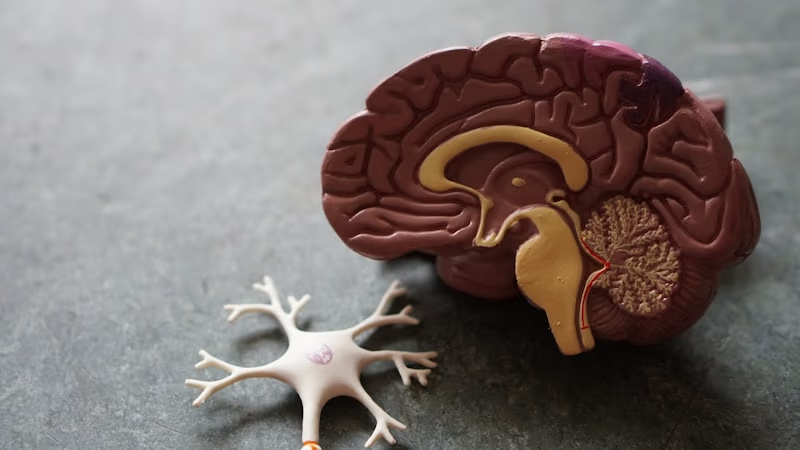

Your brain is the most metabolically demanding organ in your body. It burns through roughly 20% of your daily calories despite weighing only about three pounds. And unlike your muscles, which can run on stored fat when food is scarce, your brain depends on a steady supply of specific nutrients to function well. The foods you eat don't just fuel your brain — they shape its structure, influence neurotransmitter production, and determine how effectively it repairs itself. Here are 12 foods with genuine scientific backing for cognitive health.
1. Fatty Fish (Salmon, Sardines, Mackerel)
If there's one food category that dominates brain health research, it's fatty fish. Your brain is roughly 60% fat, and a significant portion of that fat is DHA — an omega-3 fatty acid found abundantly in cold-water fish. DHA is a structural component of brain cell membranes, and adequate levels are associated with better memory, faster processing speed, and reduced risk of cognitive decline. A large-scale study published in Neurology found that people who ate fish at least twice per week had significantly slower rates of memory decline compared to those who rarely ate fish. The effect was most pronounced in people over 50.
2. Blueberries
Blueberries consistently show up in cognitive health research, and the reason is their exceptionally high concentration of anthocyanins — plant compounds that cross the blood-brain barrier and accumulate in brain regions involved in learning and memory. A study from the University of Exeter found that daily blueberry consumption improved blood flow to the brain and performance on cognitive tasks in older adults. The benefits appear to be dose-dependent: the more consistently you eat them, the stronger the effect. Fresh or frozen both work — the freezing process actually preserves anthocyanin content well.
3. Walnuts
It's almost poetic that walnuts look like tiny brains, because they're genuinely good for your brain. They're the only tree nut with a significant amount of alpha-linolenic acid (ALA), a plant-based omega-3 fatty acid. They also contain polyphenols and vitamin E, both of which combat oxidative stress in neural tissue. Research from UCLA found that walnut consumption was associated with better cognitive test scores across age groups, with the strongest effects seen in older adults. About a handful per day (roughly 1 ounce) appears to be the sweet spot.
4. Dark Leafy Greens
Spinach, kale, collard greens, and Swiss chard deliver a combination of nutrients that few other foods can match: folate, vitamin K, lutein, and beta-carotene. The MIND diet study — one of the largest dietary studies on cognitive health — identified leafy greens as the single most protective food category against cognitive decline. Participants who ate roughly six servings per week had brains that appeared 11 years younger on cognitive testing compared to those who rarely ate greens. The key is consistency. A salad once a month isn't going to cut it.
5. Eggs
Eggs are one of the best dietary sources of choline — a nutrient that your brain uses to produce acetylcholine, a neurotransmitter essential for memory and mood regulation. Most Americans don't get enough choline from their diets, and deficiency is linked to poor cognitive performance. Eggs also provide B12, lutein, and high-quality protein. The yolk is where virtually all the choline lives, so egg-white omelets miss the point entirely. Two to three whole eggs per day is supported by current research as safe and beneficial for most people.
6. Dark Chocolate (and Cacao)
Before you reach for a candy bar — this is about dark chocolate with at least 70% cacao content. Cacao is rich in flavonoids, particularly epicatechin, which improves blood flow to the brain and promotes neuroplasticity. A study published in Scientific Reports found that participants who consumed high-flavonoid chocolate showed improved performance on complex cognitive tasks within two hours. The long-term benefits are even more interesting: regular cocoa flavonoid consumption has been associated with reduced risk of dementia in several large observational studies. An ounce or two of quality dark chocolate is a reasonable daily amount.
7. Turmeric
Curcumin, the active compound in turmeric, has potent anti-inflammatory and antioxidant properties. What makes it particularly relevant for brain health is its ability to cross the blood-brain barrier and directly reduce neuroinflammation. A UCLA study found that people who took curcumin supplements showed improved memory and attention over 18 months, and brain scans revealed reduced amyloid and tau deposits — the proteins associated with Alzheimer's disease. The challenge is absorption: curcumin on its own is poorly absorbed. Pairing turmeric with black pepper (which contains piperine) increases absorption by up to 2,000%.
8. Avocados
Avocados provide monounsaturated fats that support healthy blood flow — and healthy blood flow means a healthy brain. They're also excellent sources of folate, vitamin K, and potassium. A study from Tufts University found that older adults who ate one avocado daily for six months showed improvements in working memory and problem-solving ability. The combination of healthy fats and lutein (which avocados contain in unusually high amounts) appears to work synergistically for cognitive benefit.
9. Berries (Strawberries, Blackberries, Raspberries)
While blueberries get the most attention, other berries deserve recognition too. Strawberries are rich in fisetin, a flavonoid that has shown promise for memory function in animal studies. Blackberries and raspberries provide anthocyanins, ellagic acid, and vitamin C — all of which combat the oxidative stress that accelerates brain aging. The Nurses' Health Study, which tracked over 16,000 women, found that higher berry intake was associated with slower cognitive decline by up to 2.5 years. Aim for two to three servings of mixed berries per week.
10. Extra Virgin Olive Oil
The Mediterranean diet is consistently ranked as one of the best eating patterns for brain health, and extra virgin olive oil is its cornerstone. EVOO contains oleocanthal, a compound with anti-inflammatory effects comparable to ibuprofen. It also delivers polyphenols that protect brain cells from oxidative damage. The PREDIMED trial — a landmark study involving over 7,000 participants — found that a Mediterranean diet supplemented with extra virgin olive oil significantly reduced the risk of cognitive impairment. Use it as your primary cooking oil and for salad dressings.
11. Green Tea
Green tea contains L-theanine, an amino acid that crosses the blood-brain barrier and promotes alpha brain wave activity — the state associated with calm, focused alertness. Combined with a modest amount of caffeine, green tea provides a smooth cognitive boost without the jittery crash that coffee sometimes causes. EGCG, the primary catechin in green tea, also has neuroprotective properties. Epidemiological studies from Japan suggest that regular green tea drinkers have a significantly lower risk of cognitive decline. Two to three cups daily appears to be the most beneficial range.
12. Fermented Foods
Yogurt, kefir, kimchi, sauerkraut, and other fermented foods support brain health through a pathway that might surprise you: the gut-brain axis. Your gut microbiome communicates directly with your brain via the vagus nerve and produces neurotransmitters including about 90% of your body's serotonin. A study from UCLA found that women who consumed probiotic-rich yogurt daily showed altered brain activity in regions associated with emotion and sensory processing. Feeding your gut bacteria well is, in a very real sense, feeding your brain.
How to Put This Into Practice
You don't need to eat all 12 of these foods every day. The research consistently shows that overall dietary patterns matter more than individual superfoods. The MIND diet — a hybrid of Mediterranean and DASH diets specifically designed for brain health — provides a practical framework. Focus on building meals around leafy greens, berries, nuts, fish, olive oil, and whole grains. Reduce processed foods, excessive sugar, and refined carbohydrates. Even moderate adherence to a brain-healthy eating pattern shows meaningful cognitive benefits.
- Aim for fatty fish at least twice per week
- Eat a serving of berries most days
- Include leafy greens in at least one meal daily
- Use extra virgin olive oil as your primary cooking fat
- Snack on a handful of walnuts instead of processed snacks
- Replace sugary drinks with green tea
Looking for Additional Cognitive Support?
Diet is the foundation, but some people benefit from targeted supplementation as well. We've reviewed several brain health supplements to help you understand what works and what doesn't.
See Brain Health ReviewsThe Bottom Line
Your brain doesn't run on willpower — it runs on nutrients. The foods you eat today directly influence how clearly you think, how well you remember, and how resilient your brain remains as you age. You don't need exotic superfoods or expensive health trends. The most powerful brain foods are ordinary, affordable, and available at any grocery store. Start incorporating a few of these into your weekly routine, and give your brain the raw materials it needs to perform at its best.
Looking for Brain Health supplements?
Our experts have reviewed and compared the top brain health supplements to help you find the right one.
See our expert comparisonFrequently Asked Questions
Can food really improve brain function, or is it just about preventing decline?
Both. In the short term, certain foods can measurably improve cognitive performance — for example, blueberry consumption has been shown to enhance memory within hours. In the long term, a brain-healthy diet reduces risk of cognitive decline and dementia. The benefits are both immediate and cumulative.
How quickly will I notice cognitive improvements from changing my diet?
Some effects are surprisingly fast. Improved blood flow from foods like dark chocolate or beets can enhance cognitive performance within hours. However, the structural benefits — better neurotransmitter production, reduced inflammation, stronger cell membranes — typically take weeks to months of consistent eating to fully manifest. Most people report feeling noticeably sharper within 2-4 weeks of dietary changes.
Are brain health supplements a substitute for eating these foods?
No. Supplements can fill specific nutrient gaps, but they can't replicate the complex synergy of whole foods. A fish oil capsule provides omega-3s, but a piece of salmon provides omega-3s plus high-quality protein, selenium, B vitamins, and vitamin D — all of which work together. Think of supplements as targeted support, not a replacement for a good diet.
What foods are worst for brain health?
The biggest offenders are highly processed foods high in refined sugar, trans fats, and artificial additives. Sugary drinks are particularly harmful — research has linked regular soda consumption to reduced brain volume and poorer memory. Excessive alcohol is also detrimental, as it directly damages brain cells and disrupts neurotransmitter balance. Reducing these foods may be just as important as adding brain-healthy ones.
Does the MIND diet really work for preventing dementia?
The evidence is encouraging. The original MIND diet study found that strict adherence reduced Alzheimer's risk by up to 53%, and even moderate adherence reduced risk by about 35%. Subsequent studies have largely confirmed these findings, though the effect sizes vary. It's one of the most well-studied dietary patterns for brain health, and its recommendations align well with general nutritional science.