
Here's a truth that the fitness industry doesn't love to advertise: you don't need a gym to lose weight after 40. You don't need expensive equipment, a personal trainer, or two hours a day. What you do need is the right type of exercise — movements that build and preserve muscle, elevate your heart rate efficiently, and don't wreck your joints in the process. Whether you're starting from scratch or getting back into fitness after a long break, this guide covers exercises you can do at home with minimal or no equipment.
Why Exercise Selection Matters More After 40
In your twenties, almost any exercise works because your body is resilient and recovery is fast. After 40, the equation changes. Your joints have more miles on them. Recovery takes longer. Muscle loss is an active concern. And your time is probably more limited than it was a decade ago. The best exercise program for this stage of life is one that maximizes results per minute spent, protects your joints, and builds the lean muscle tissue that keeps your metabolism humming.
That means the old formula of spending 45 minutes on a treadmill isn't optimal. Steady-state cardio burns calories during the session, but it does little to build muscle and can actually contribute to muscle loss if overdone. The research is clear: a combination of resistance training and shorter bouts of higher-intensity cardio produces better fat loss, better muscle retention, and better metabolic outcomes than cardio alone.
The Foundation: Bodyweight Strength Exercises
You don't need barbells or machines to build functional strength. Your own body weight provides more than enough resistance, especially if you're not currently strength training. These foundational movements target the largest muscle groups in your body, which is exactly where you get the most metabolic benefit.
Squats
Squats work your quadriceps, hamstrings, glutes, and core simultaneously. They're arguably the single most effective lower body exercise, and they translate directly to everyday movements like sitting down and standing up. Start with bodyweight squats, aiming for sets of 10-15. As you get stronger, hold a gallon jug of water, a heavy book, or a backpack filled with books to add resistance. Focus on keeping your chest up, pushing your hips back, and not letting your knees cave inward.
Push-Ups (Modified if Needed)
Push-ups work your chest, shoulders, triceps, and core. If a full push-up from the floor is too challenging right now, start with wall push-ups (standing, pushing away from a wall), then progress to incline push-ups using a counter or sturdy chair, and eventually to the floor. There's no shame in modifying — what matters is that you're loading your upper body muscles progressively over time.
Lunges
Lunges build single-leg strength and balance, both of which decline with age and matter enormously for fall prevention and joint stability. Forward lunges, reverse lunges, and walking lunges all work. If balance is a concern, hold onto a wall or chair for support. Aim for 8-12 per leg. Reverse lunges tend to be more knee-friendly than forward lunges for people with joint sensitivity.
Planks
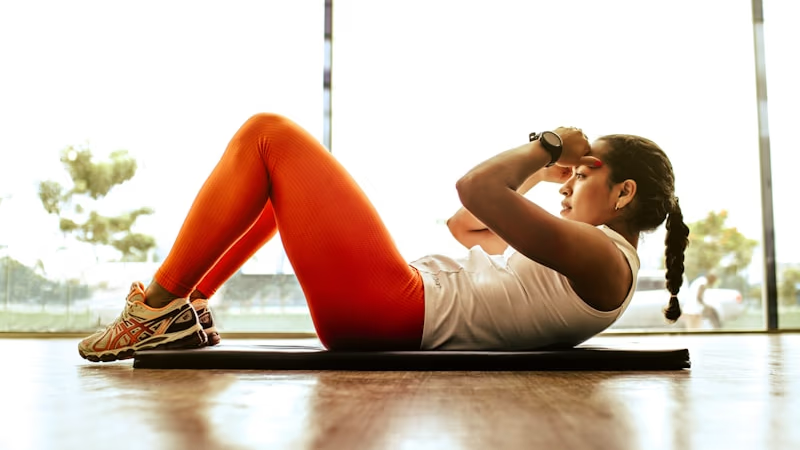
Core strength protects your lower back, improves posture, and supports every other movement you do. The plank is one of the safest and most effective core exercises. Start with holding for 20-30 seconds and build toward 60 seconds. Side planks add rotational stability. If holding a full plank is too difficult initially, start from your knees.
Adding Cardio That Doesn't Destroy Your Joints
High-impact cardio like running can be tough on knees, hips, and ankles after 40 — especially if you're carrying extra weight. Lower-impact options provide the cardiovascular benefits without the joint stress.
- Brisk walking — Underrated and highly effective. A 30-minute brisk walk burns 150-200 calories and is gentle on joints. Walking after meals also helps regulate blood sugar.
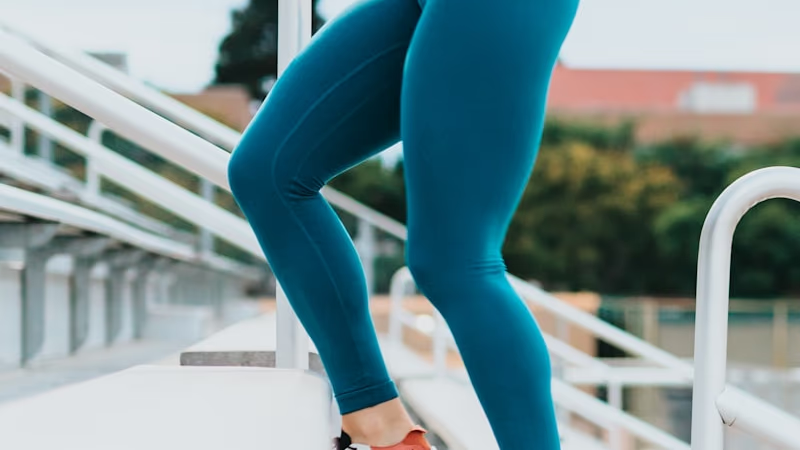
- Stair climbing — If you have stairs at home, walking up and down for 10-15 minutes is an excellent cardiovascular and lower body workout.
- Swimming or water aerobics — Zero impact, full-body workout. The water provides natural resistance, making it simultaneously strength training and cardio.
- Cycling (stationary or outdoor) — Low impact on knees and effective for building leg endurance. Even a basic pedal exerciser that fits under a desk can be useful.
- Dance-based workouts — Free videos online offer everything from low-impact dance cardio to Zumba-style routines. They're fun, which means you're more likely to stick with them.
A Simple Home Workout Template
You don't need a complicated program. Here's a straightforward template you can follow three to four days per week, alternating between two routines. Each session takes about 25-35 minutes.
- Day A: Squats (3 sets of 12), push-ups (3 sets of 8-12), lunges (3 sets of 10 per leg), plank (3 holds of 30-60 seconds), 10 minutes of brisk walking or stair climbing
- Day B: Wall sits (3 holds of 30-45 seconds), incline push-ups (3 sets of 10-15), step-ups on a sturdy stair (3 sets of 12 per leg), side planks (3 holds per side of 20-30 seconds), 10 minutes of brisk walking or stair climbing
- Rest days: Light walking, stretching, or gentle yoga. Recovery is when your muscles actually rebuild, so don't skip rest days.
How to Progress Without Overdoing It
The biggest mistake people over 40 make with exercise is doing too much too soon. Starting with three workouts per week and gradually increasing intensity is far more effective than going all-out for two weeks and then burning out or getting injured. Progress by adding one or two reps per set each week, or by increasing the duration of your cardio by a few minutes. Small, consistent increases add up to significant changes over months.
Pay attention to joint pain versus muscle soreness. Muscle soreness after a workout is normal and usually resolves within 48 hours. Sharp or persistent joint pain is your body telling you to modify or stop an exercise. There is always an alternative movement that works the same muscles without the discomfort.
Supporting Your Weight Loss Journey
Exercise works best when combined with good nutrition and, for some people, targeted supplementation. We've reviewed weight management products to help you understand what might complement your fitness efforts.
See Weight Loss ReviewsThe Bottom Line
The best exercise for weight loss after 40 isn't the hardest one — it's the one you'll actually do consistently. Bodyweight strength exercises, moderate cardio that spares your joints, and adequate recovery time form a proven combination for fat loss and muscle preservation. You can do all of it at home in under 30 minutes a day. Start where you are, progress gradually, and remember that showing up three times a week for a year beats an intense January gym resolution that lasts three weeks.
Looking for Weight Loss supplements?
Our experts have reviewed and compared the top weight loss supplements to help you find the right one.
See our expert comparisonFrequently Asked Questions
How often should I exercise to lose weight after 40?
Three to four structured workout sessions per week is a solid target for most people. This should include at least two strength training sessions and one to two cardio sessions. Daily walking — even just 15-20 minutes — provides additional benefits without adding recovery stress. Consistency over time matters far more than frequency in any given week.
Can I lose weight with just walking?
Walking alone can contribute to weight loss, especially if combined with dietary changes. However, it won't prevent the muscle loss that naturally occurs after 40. For the best results, combine walking with some form of resistance training, even if it's just bodyweight exercises like squats and push-ups a few times per week.
What if I have bad knees or joint problems?
Many exercises can be modified for joint issues. Swap deep squats for partial squats or wall sits. Replace lunges with step-ups or leg raises. Choose swimming, cycling, or seated exercises over high-impact options. A physical therapist can help you design a program that works around specific joint limitations while still building strength.
Is stretching important for weight loss?
Stretching doesn't directly burn significant calories, but it plays an important supporting role. Good flexibility reduces injury risk, improves range of motion (which makes strength exercises more effective), and can help with recovery. Spending 5-10 minutes stretching after each workout is a worthwhile investment, especially after 40 when flexibility naturally decreases.
How long before I see results from exercising?
You'll likely feel better within the first one to two weeks — more energy, better sleep, improved mood. Visible physical changes typically take four to eight weeks of consistent training. The scale may not move quickly if you're building muscle while losing fat, so track progress through how your clothes fit and how you feel, not just your weight.